An Attempt at Automation
When I started my first job, I had no idea how repetitive the work would be: Take a piece of paper, transcribe it, classify it, and save it. All of this in a huge, cluttered Microsoft Access database. Out of frustration from the regular view, an idea was born—to isolate the technology necessary for my work.
Absolute Minimalism
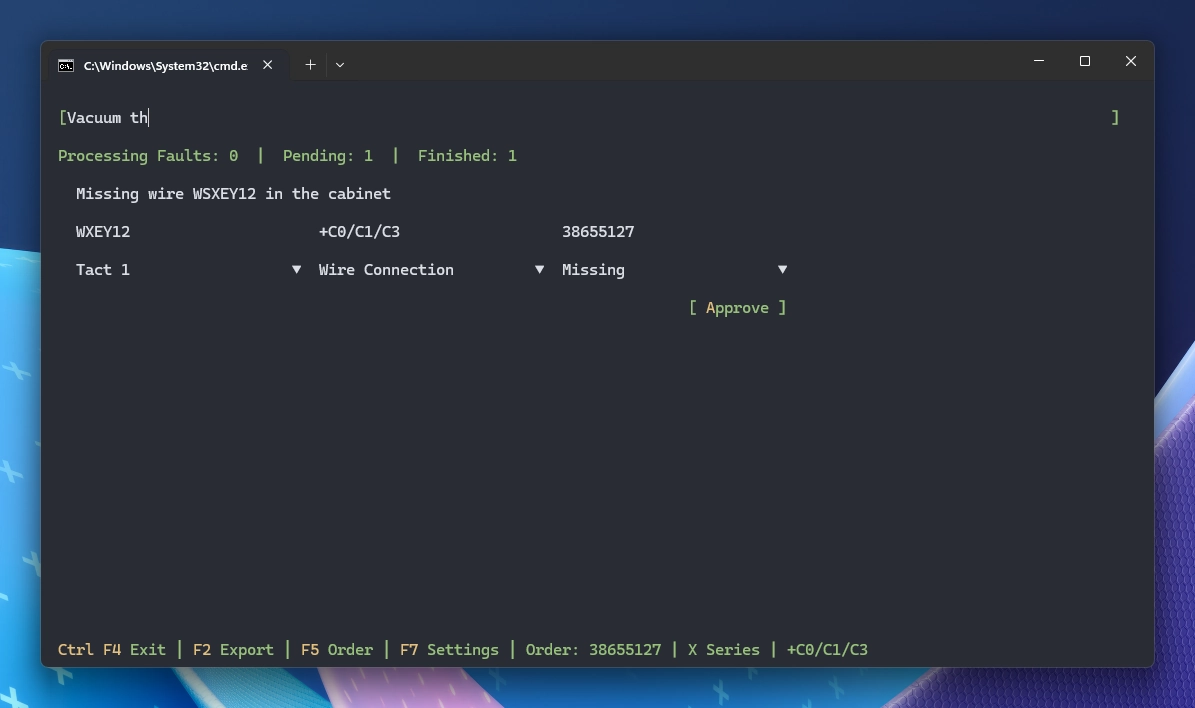
If I said I would reduce the process to the bare minimum, I meant it deadly seriously. Luckily, I didn't get as far as languages like C++ or Assembly. My choice at the time was the only reasonable language I knew: C#. However, I incorporated simplicity into the application's controls. My model was the text-based interface applications of the last millennium. I saw it as the best possible decision.
Clumsy WinForms based purely on windows.h were not only difficult to control advanced features but also slow and unmaintained. In stark contrast was the open-source library Terminal.Gui, which, in addition to its relatively advanced features, offered regular updates and new functions.
Limits of the Chosen Environment
As I could have guessed when creating the .sln project, the idyllic terminal interface has its limits. Animations, complex multi-threaded processes, or more complex work with windows or artificial intelligence are completely alien to it. The fact that many of these functions were a necessity for the Henkel project put me at a crossroads.
Early Retirement
The path was not the most pleasant, but it was clear. While actively working on the application, I discovered the Windows App SDK, or its key component WinUI. It didn't take long for me to muster the courage to start working on a new solution to the original problem. The answer was DN Henkel Vision — the Henkel project, but now with a true vision and a visual interface.